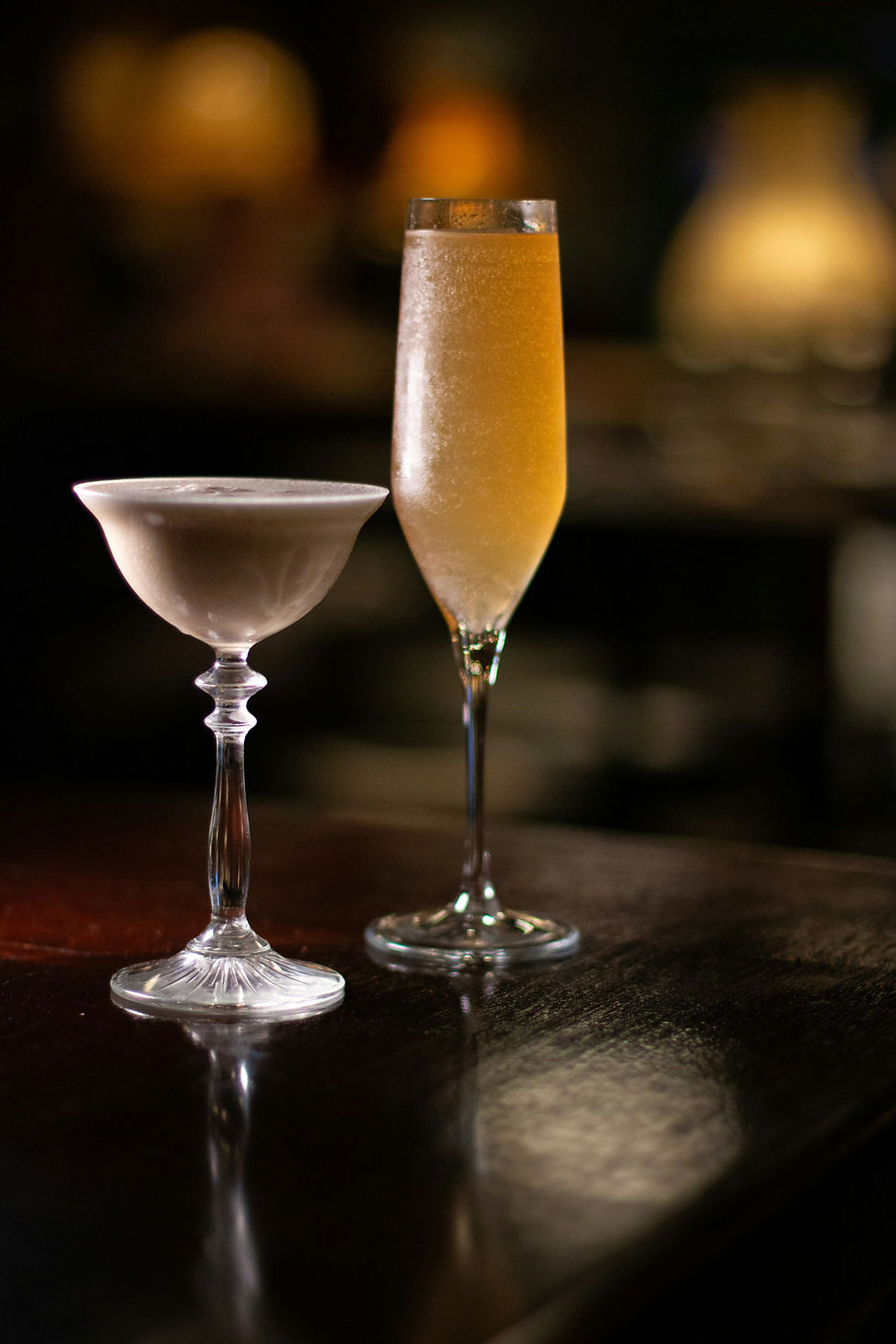
Daisy: The Mother of Modern Classics
Updated: Sep 11

If you’ve ever enjoyed a Margarita, a Sidecar, or even a Cosmopolitan, you owe a debt of gratitude to a drink you may have never actually ordered: The Daisy.
In the family tree of mixology, the Daisy is the "missing link." It is the nineteenth-century ancestor that bridged the gap between the primitive "Sours" of the mid-1800s and the sophisticated "Cocktails" we recognize today. While its name sounds delicate and floral, the Daisy is a powerhouse template that changed the way we balance spirits.
The Genetic Code of a Classic
In the mid-to-late 1800s, most drinks were simple. You had a spirit, some sugar, and maybe a bit of water or citrus. But around the 1860s, bartenders began experimenting with "modifiers." Instead of just using plain sugar, they reached for colorful, flavorful liqueurs like orange curaçao or raspberry syrup.
A Daisy, at its core, follows a specific formula:
Spirit: (Brandy, Gin, or Whiskey were the originals)
Citrus: (Usually lemon juice)
Sweetener: (An orange liqueur or a fruit syrup)
The "Fizz": (A small splash of soda water)
This combination created a drink that was longer than a standard sour but punchier than a punch. It was bright, refreshing, and—most importantly—infinitely adaptable.
The "Spanish" Connection
The most fascinating part of the Daisy’s history isn't just its longevity; it’s its name. In the early 20th century, as the drink traveled south of the border, the "Brandy Daisy" or "Tequila Daisy" became popular in Mexico.
The Spanish word for "Daisy" is Margarita.
While the exact "aha!" moment is lost to history, most cocktail historians agree that the Margarita we know and love today is simply a Tequila Daisy that swapped the traditional lemon for lime and eventually ditched the soda splash. When you sip a Margarita, you are literally drinking a translated Daisy.
How to Make a Classic Brandy Daisy
To understand why this drink ruled the bars of the 1870s, you have to try the original "Grandmother" of the family.
2 oz. Brandy or Cognac
.75 oz fresh lemon juice
.5 oz yellow chartreuse or curaçao
1 bar-spoon grenadine
1 to 2 oz chilled soda water
Combine everything except the soda water in a shaker with ice. Shake vigorously and strain into a chilled coupe or a "Nick and Nora" glass. Top it off with a small splash of soda—just enough to give it a lift without diluting the flavor.
Why the Daisy Still Matters in 2026
In an era where we often overcomplicate drinks with foams and molecular garnishes, the Daisy reminds us of the power of the template. It teaches us that if you understand the balance between acid, sugar, and spirit, you can substitute almost any ingredient and end up with something delicious. Swap the Brandy for Gin, and you have a Gin Daisy. Swap the orange liqueur for raspberry, and you’re halfway to a Clover Club. The Daisy isn't just a recipe; it’s the blueprint for the modern bar.
"A Daisy is like a well-tailored suit; it fits every spirit perfectly, provided you get the proportions right."
The next time you’re at a craft cocktail bar, try asking the bartender for their take on a classic Brandy Daisy. It’s a great way to test a pro’s understanding of cocktail history. Since the Daisy is the ancestor of so many drinks, do you usually prefer your "sours" with a fruitier edge or a more herbal profile?